Prevo Streaming — The Weekend Read
Issue No. 74 · October 18, 2026
Five Questions for Alexander Beale
Alexander Beale last spoke to The Weekend Read in December, in Issue No. 29. With the premiere four days away, we texted him five questions.
01 — Collider called the original “near-perfect” this week, and I know a sequel has been on your mind for a while. Before you committed to making it, what did you need to be sure a sequel could deliver?
That’s a nice thing to say. I think when you make a sequel – or any film – you want to top what came before. It’s a tricky balance, though, because while you want to honor and build off of what came before, you still want to give the audience something fresh.
Where the first one is more of an eerie suspense piece (although still with a big exclamation point at the end), I do think Midnight Movie Club II is more of a classic horror. Just as much Rod Serling, but with a little more James Wan. It has a few more jolts and thrills, and it does come with the feeling of The Ticket-Taker entity being bigger and more imposing than ever. There is a slightly more in-your-face quality to the thrills and punctuation marks in this film, all still predicated on the language of suspense that fueled the first one.
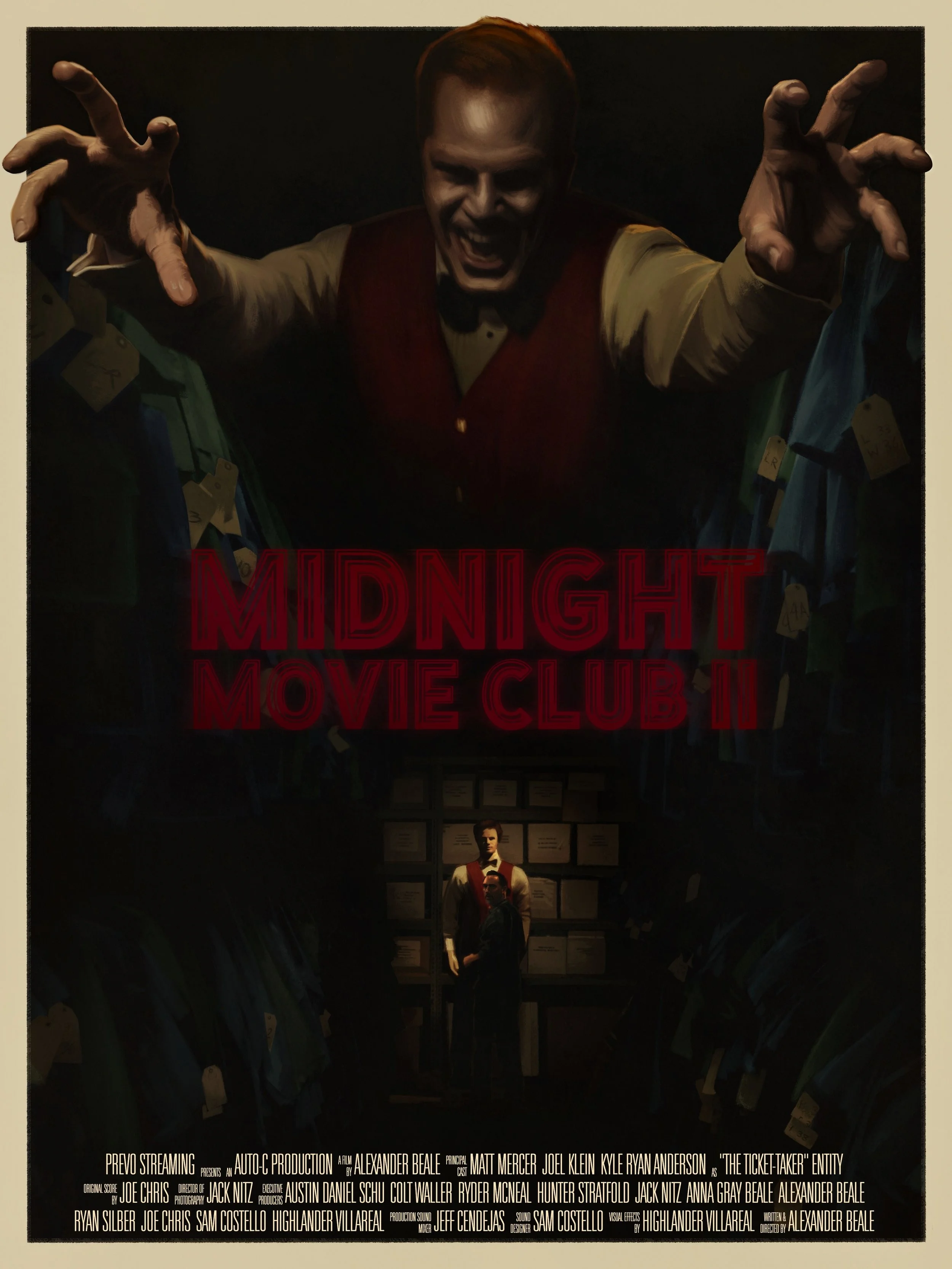
02 — No spoilers, but this time The Ticket-Taker takes on a form we haven’t seen him assume before. How did that change the way you shot him, and what you asked of Kyle?
In the first film, Kyle and I explored The Ticket-Taker as a kind of nascent, almost childlike entity, eyes wide to the world. He seems to really enjoy the kind of leering and the lurking he does. It’s his nature. It’s play for him. Like a golden retriever puppy who doesn’t quite know his size.
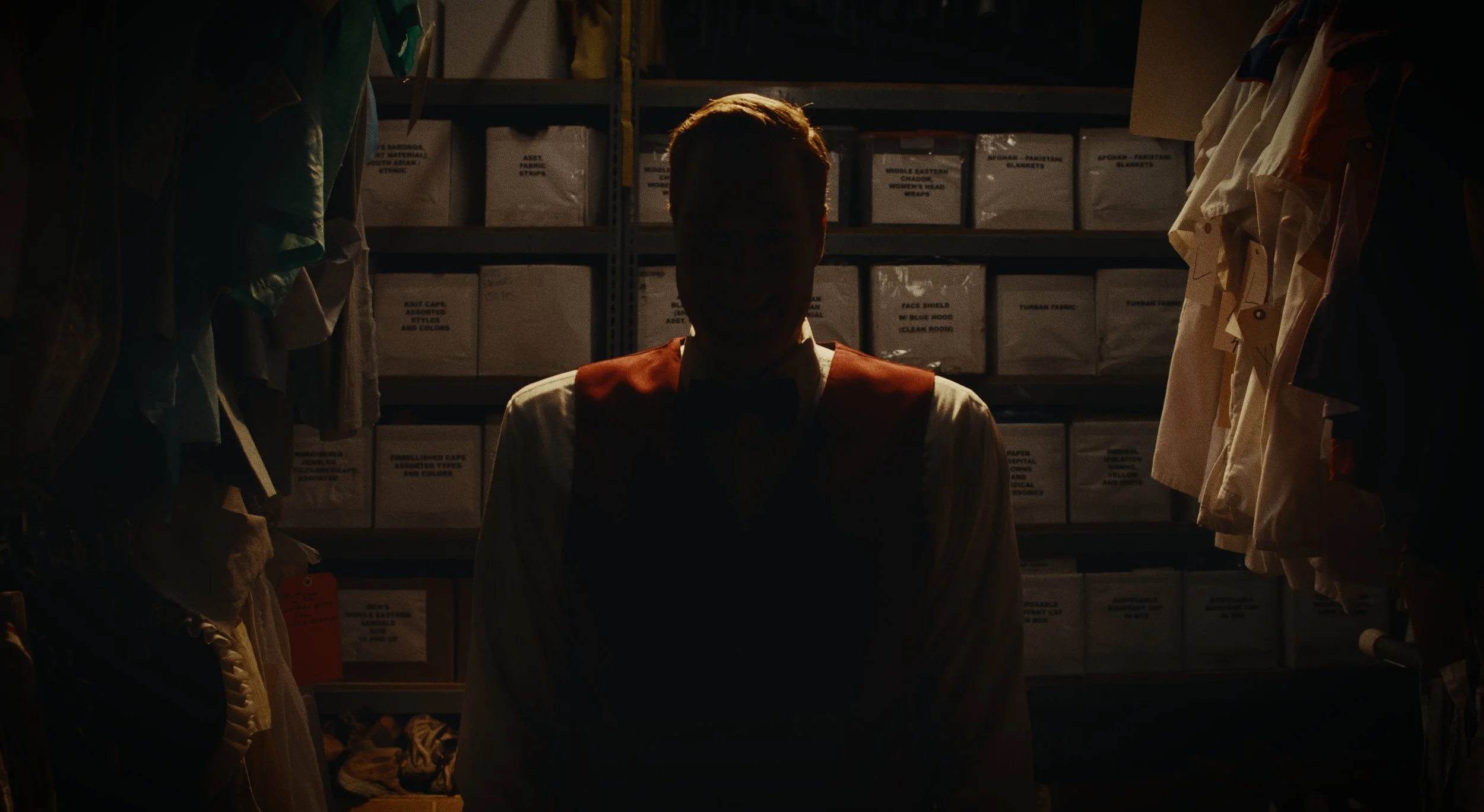
However, in this one, I wanted to explore The Ticket-Taker as a more developed predator. Sure, there is this playful, trickster quality to him, kind of playing with his food, but in Midnight Movie Club II he’s less a golden retriever and more a great white shark swimming right at you out of ink-black water. You’ll see what I mean.
03 — Your day job is producing visual effects on films like Mank and The Killer. How did that background shape the way you made Midnight Movie Club II?
VFX play a massive role in my process. In principle, I don’t want to use VFX to make my films – I want to use VFX to make my films BETTER. I think audiences would be surprised to find out just how many shots in the Midnight Movie Club films are touched by VFX – it’s almost all of them. Sure, there are obvious examples, like the movie screen imagery or The Ticket-Taker’s uncannily wide and toothy smile, but 90% of the time the VFX enhancements go completely undetected.
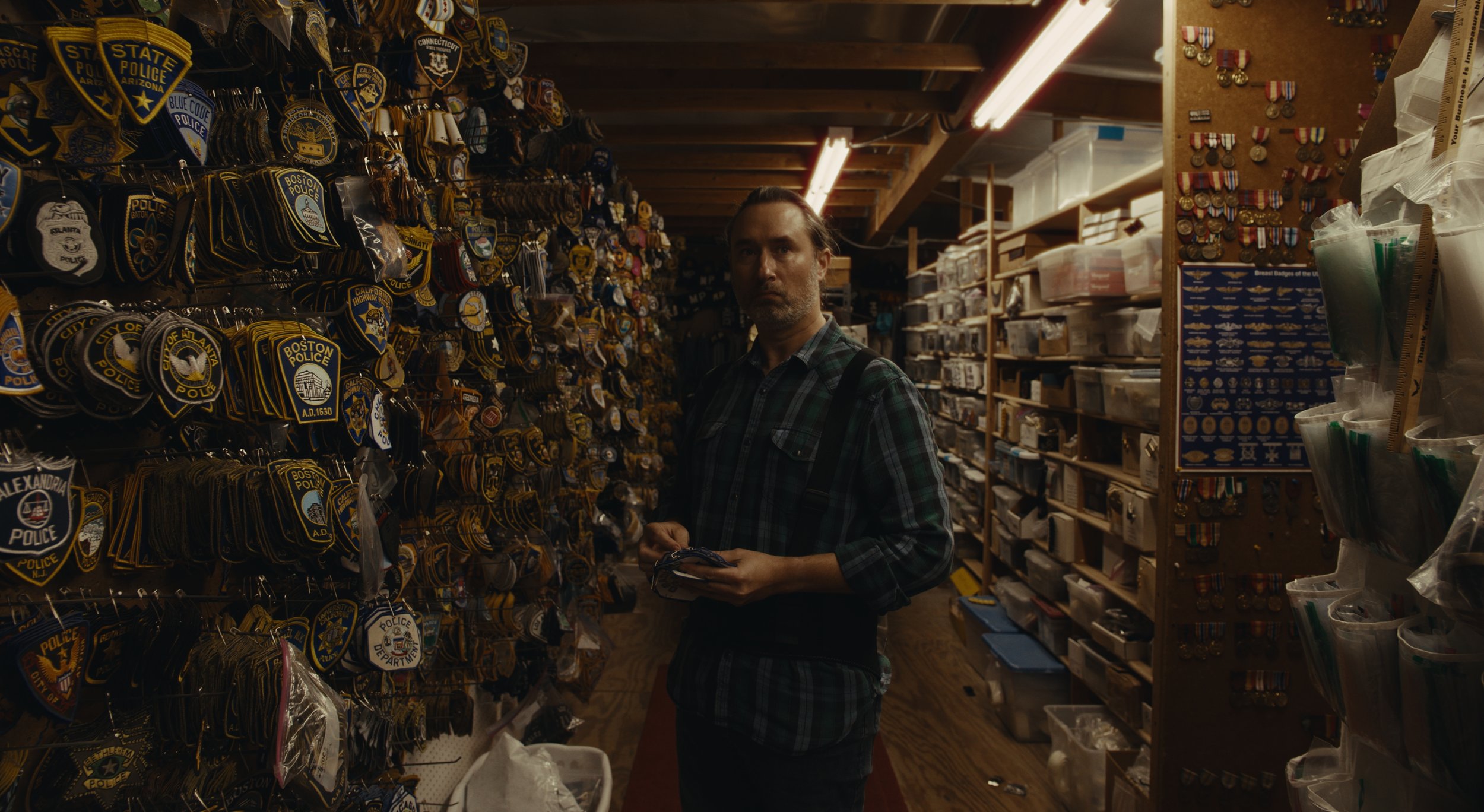
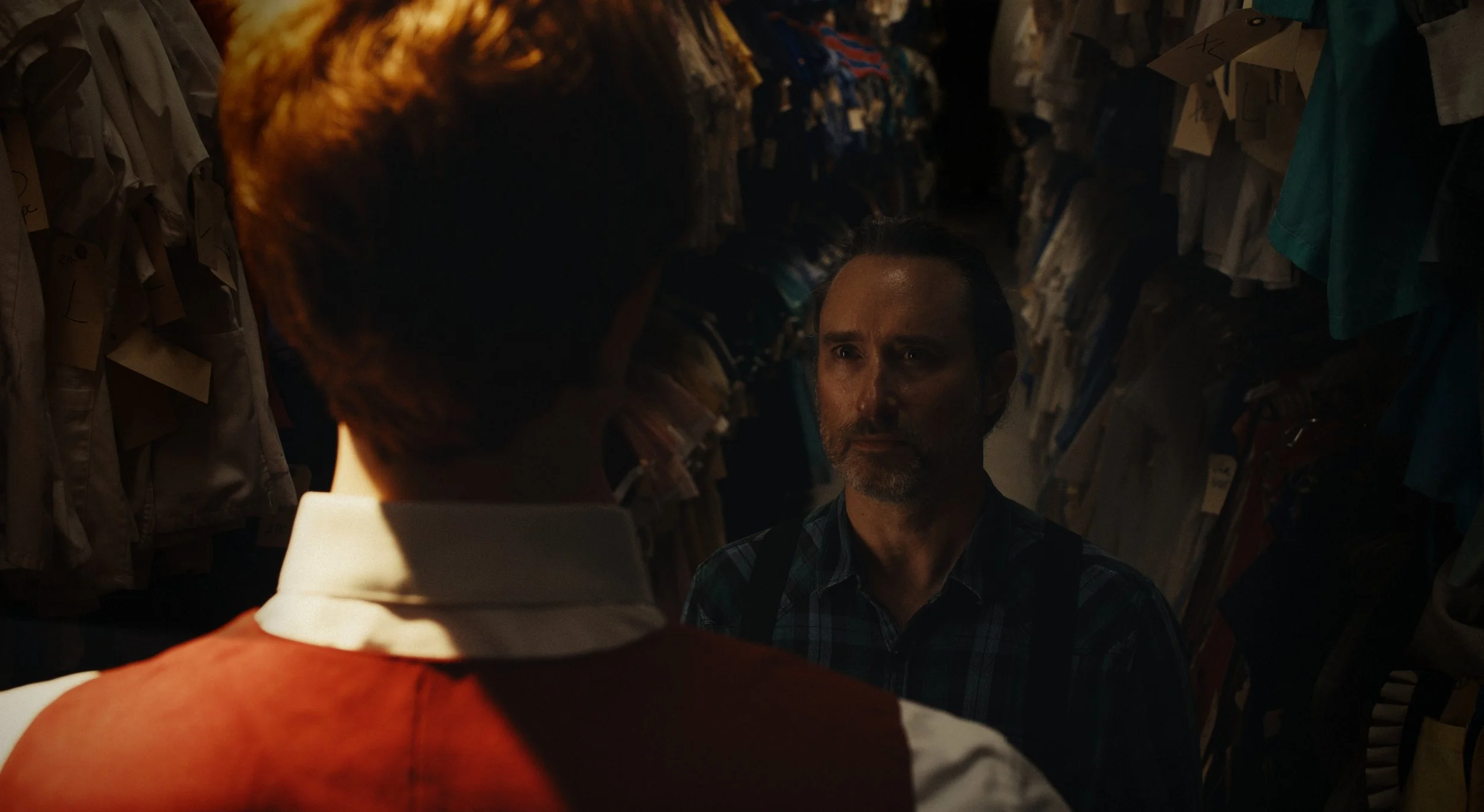
For example, in this new film, we used VFX to subtly broaden the shoulders and add height to The Ticket-Taker mannequin, to elongate and stylize Eddie’s cast shadow in one of the wides, and even to move hanging clothes further in to create a better frame and composition around our subjects. These might be negligible differences at first glance or on paper, but in aggregate, they afford the film a substantial net gain in production value.
All said, I count myself very lucky to have found a home in the visual effects industry and for the tools it has afforded me. I am just a VFX producer, but I have a huge amount of respect for VFX artists, who I consider to be the unsung heroes of the film industry.
04 — What’s your point of view as a director? If someone watched everything you’ve made with your name taken off, what would tell them it was yours?
Shoot, I love this question, but it is a big one. For starters, I like to begin with all options on the table and then whittle them down to the single best and only choice from there, and that goes from focal lengths to depth of field to colors and gear and beyond. I never want to hubristically impose a style or aesthetic on the material just because that’s what’s “cool” or in vogue. I want to try to listen to the story and hear what it is telling me. Same for locations. Judy Kim, the owner of the Gardena Cinema, has said she believes a theater like that has a soul. I tend to agree, and I want to lend that same ethos to all locations when I consider them for a film.
That all said, I do think my films have a commonality in terms of their subjective POV, their intentionality, and their commitment to the language of suspense. To me, the horror audience is best served with stories that are IMMERSIVE as opposed to presentational or observational. I don’t want the audience to ever feel like they are just watching TV, watching things happen on a flat screen. No – I strive to attach them to the subjective point of view of our characters and to envelop them in the HAPTIC world of the film. It’s very important that they are right there with our hero walking down the dark hallway toward some unknown end.
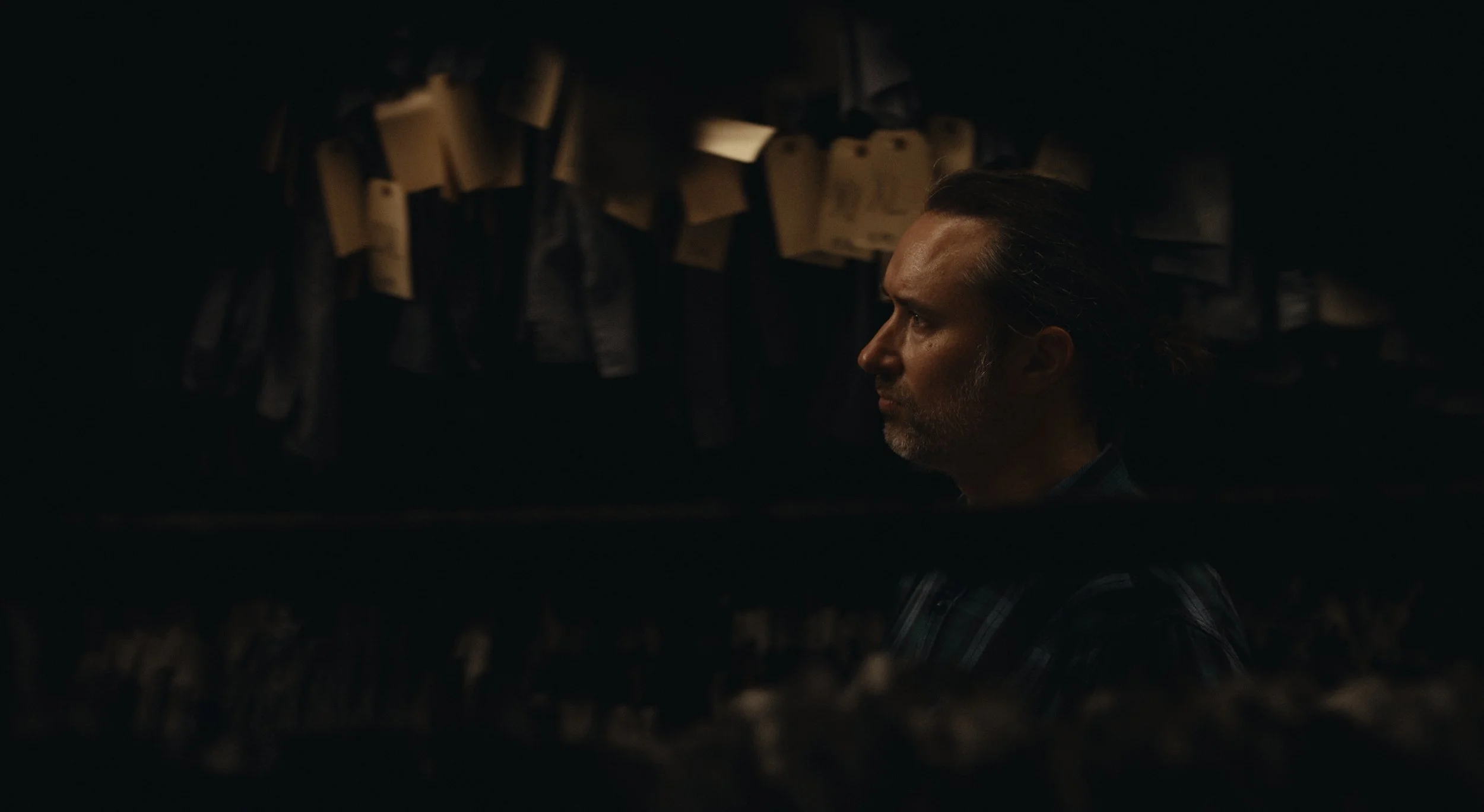
I strive to achieve this by leveraging all departments in concert – sound, music, and more – but chief among them are camera and focal length. I think a lot of horror filmmakers get it wrong by defaulting to anamorphic or large format or longer lenses that can immediately compress the z-depth of the scene and therefore chip away at the immersive quality of the film. Alternatively, I think wide-angle lenses go a long way to immerse the audience in a way that best serves the genre and the story. For instance, in Door, we lived on a 16mm lens, and here in Midnight Movie Club II we lived on an 18mm, each tested millimeter by millimeter to find the single best representation of the actual space and subjects. That’s just one example. I could go on.
05 — What’s the right way for our audience to watch Midnight Movie Club II on Thursday?
4K and in the dark! On PREVO, of course.